
Blade Night : Rhythm Saber
HOLA GAMEMusic
4.860.00 Reviews
- Version
- 1.2.6
- Installs
- 1.00M
- Age Rating
- Everyone
Screenshots
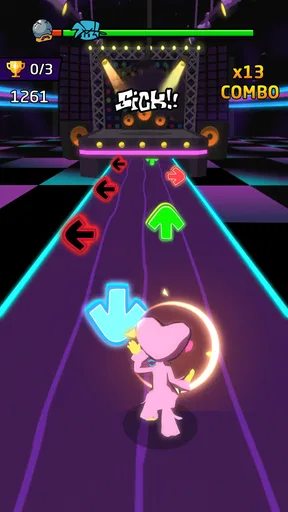
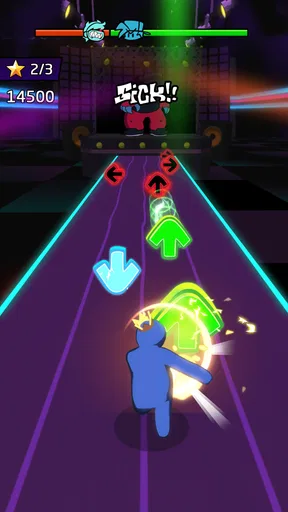
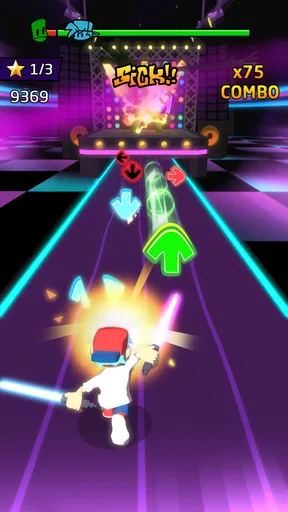
Our Review of Blade Night : Rhythm Saber
 Analysis by Appyee
I approached Blade Night: Rhythm Saber as a quick music game rather than a deep rhythm-training tool. Its basic appeal is easy to understand: music, timing, a three-dimensional track, and blade movements that ask me to react while the song keeps moving forward. That makes it a natural choice for short sessions when I want something more active than simply listening to a playlist, but less demanding than a full strategy or action game.
The game comes from HOLA GAME and is available free of charge, with optional purchases ranging from $0.99 to $1.99 per item. It is rated for Everyone, so the presentation is aimed at a broad audience. The store page shows a 4.8 average from around 2.7 thousand ratings, while the game has passed one million installs. Those figures suggest that the straightforward rhythm-runner idea has found a sizeable audience, although popularity alone does not tell me whether it will suit someone looking for precise, serious rhythm gameplay.
How Blade Night feels when the music starts
The first thing I notice is that the game’s speed is perceived through several elements at once. The runway moves, the music supplies a beat, and the blade action gives each moment a physical sense of direction. Even when the underlying interaction is simple, the combination can make a short stage feel lively. I do not need a long explanation to understand what I am supposed to do: watch the incoming sequence, react to the rhythm, and try to stay in control.
That simplicity is one of its strongest qualities. I can pick it up during a short break without first learning a complicated menu system or building a character. It works particularly well for players who enjoy music games but prefer immediate movement over tapping static notes on a flat screen. The three-dimensional runway gives the experience more visual motion than a conventional scrolling rhythm layout.
At the same time, I would not mistake the presentation for a complete substitute for a dedicated rhythm game. Players who care most about exact timing windows, song charts, practice tools, or detailed performance analysis may find the experience lighter than expected. Blade Night is better understood as an accessible music-themed action game: the rhythm is central to the mood and timing, but the overall attraction comes from the combination of music and movement.
What makes the speed feel manageable
Fast-looking gameplay can become tiring when every moment demands maximum concentration. In my experience, the appeal here comes from the way the game turns speed into a short burst of attention. I can focus on the path immediately in front of me instead of planning a long sequence several minutes ahead. That makes it approachable for casual players and younger users who want an energetic game without committing to a lengthy session.
A useful habit is to watch the lane and the next incoming pattern rather than staring only at the blade animation. The visual effect is attractive, but it can also pull attention away from the actual timing cue. I found that treating the music as a guide and the runway as the primary visual reference made the action feel less frantic. This is a small adjustment, but it matters when a stage becomes visually busy.
The best use case is a quick reset between everyday tasks. If I have a few minutes while waiting for an appointment or taking a break from work, a short run gives me something active to do without the commitment of a long campaign. It is also suitable for sharing a phone with someone who wants to try a music game immediately, because the central idea is easy to demonstrate.
Where heavier moments can appear
The busiest moments are not necessarily difficult because of one complicated rule. They feel heavier when several demands arrive together: following the track, reading the next movement, keeping time with the music, and ignoring decorative motion. That combination can make a stage feel faster than it might appear in a still image. Players who are new to this kind of game may need a few attempts simply to learn which visual elements deserve attention.
For that reason, I would avoid judging the game during the first few seconds. My initial reactions were more about learning the visual language than testing skill. Once I understood where to look, the action became easier to read. This is an important distinction: the early friction is partly a learning curve, not necessarily a sign that the game is unstable or unfair.
There is also a trade-off between spectacle and clarity. A bright, energetic presentation helps the game feel like a music experience, but it can make precise reading harder for players who prefer minimal interfaces. If you usually choose rhythm games with clean lanes and restrained effects, this may feel less comfortable than a traditional note-based alternative.
I would recommend playing with a steady grip and enough screen space to see the upcoming path. Trying to play while walking, riding in a moving vehicle, or holding the phone at an awkward angle undermines the timing element. The game is casual, but the interaction still benefits from a stable viewing position. That is one of the practical differences between a music game and a passive entertainment app: attention and posture affect the result.
Reliability during repeated sessions
The current version is 1.2.6, and the game has been available since November 20, 2022. In practical terms, that gives it the feel of an established release rather than a brand-new experiment. I would still separate two ideas that are often confused: a game can be widely installed and generally dependable while also showing occasional friction on a particular phone, especially when the device is busy or the operating system is older.
For normal use, the most important reliability question is whether the game lets me return to the action without making every session feel like a setup process. Blade Night suits quick play because its concept is immediately recognizable. I can approach it as a pick-up-and-play title instead of a game that requires a long preparation routine. That makes it more practical for casual use than a larger music game with extensive menus, downloads, or progression decisions.
Recovery matters just as much as the first launch. If I lose a run, I want to feel that restarting is part of the rhythm rather than a punishment that sends me through too many screens. This type of game works best when I can try again while the song and visual momentum are still fresh in my mind. The shorter the path back to another attempt, the more forgiving the experience feels, even when a mistake is frustrating.
My advice is to close demanding background apps before a longer session, particularly if the phone is older or already warm. That is not a special requirement unique to this title; it is a sensible precaution for any game combining continuous motion, music, and touch input. It also helps distinguish a genuine gameplay complaint from a device that is struggling with several tasks at once.
Device limits and everyday comfort
The listed minimum operating system is Android 7.0, which makes the game accessible to a broad range of Android devices. That does not mean every phone will provide the same experience. A newer device may feel more comfortable during visually busy sections, while an older model may be more sensitive to background activity, storage pressure, heat, or battery condition. I would not choose this game as a reason to replace a phone, but I would keep those differences in mind before expecting identical smoothness everywhere.
Resource demands are easiest to notice during extended play rather than a single test run. Continuous animation and music can make a session feel more demanding than a static puzzle game. If the phone becomes warm, the practical response is simple: take a short break, reduce other activity, and avoid judging the title while the device is already under strain. A cooler phone is usually a better environment for timing-based play.
Battery use is another everyday consideration. I would use Blade Night for focused bursts rather than leave it running in the background or play for hours while away from a charger. This is especially sensible on an older battery. The game’s free entry makes it easy to try, but free does not mean cost-free in terms of attention, battery, or screen time.
The touch screen itself can shape the experience. A small display may make the runway harder to read, while a larger phone can give the visual cues more breathing room. Players with a device that has delayed or inconsistent touch response may feel that the timing is unreliable even when the game is behaving normally. Before blaming the game, I would test the same phone with other touch-based titles and make sure the screen is clean and unobstructed.
Who will enjoy it, and who should choose something else
I think Blade Night is a good fit for casual players who want music to drive a short action session. It is also a reasonable introduction for someone who finds traditional rhythm games intimidating. The runway and blade theme provide an immediate visual goal, and the free download removes the need to make a purchase before discovering whether the style works for you.
It is less suitable for someone seeking a long-form music library, competitive ranking depth, or a highly technical practice environment. If your priority is mastering complex charts with detailed accuracy feedback, a dedicated rhythm game will probably be a better choice. If you want an endless runner built around reflexes but do not care much about music, a conventional runner may offer a more focused version of that idea.
The Everyone rating makes it an easy title to consider for family use, but I would still pay attention to how a child handles in-app purchases. Optional items cost between $0.99 and $1.99 each, so the game is free to start while still offering paid extras. For a shared device, checking purchase controls beforehand is a sensible step. That is not a criticism of the core game; it is simply part of using any free title with optional spending responsibly.
Another useful distinction is between listening and playing. Someone who wants uninterrupted music may prefer a music app, because Blade Night asks for active attention and turns the soundtrack into part of a challenge. Someone who wants a game that can be played with the sound off may also find the experience less compelling, since its identity depends heavily on the relationship between audio and movement.
My practical performance verdict
After looking at the speed, the busy sections, and the needs of different devices, I see Blade Night as a lightweight-feeling idea with a lively presentation, not as a demanding technical showcase. Its strongest performance quality is perceived responsiveness: when the visual track, music, and blade action line up, the game feels immediate and satisfying. Its weaker side is that visual energy can sometimes compete with clarity, especially for players who want a very controlled rhythm interface.
The game’s age, broad Android compatibility, and large install base make it an easy title to test on an existing phone. I would not promise identical results on every device, but the minimum system requirement is not especially restrictive. The sensible approach is to try a short session first, then decide whether the screen remains clear, the controls feel natural, and the phone stays comfortable during play.
What I appreciate most is the low commitment. I can start for free, understand the central interaction quickly, and decide for myself whether the music-runway combination has enough variety to keep me interested. What holds it back is the same simplicity that makes it approachable: players wanting deep rhythm systems, extensive customization, or a more analytical skill curve may outgrow it.
My recommendation is therefore specific rather than universal. I would suggest it to a friend who wants a colorful, music-centered reflex game for short sessions and already has an Android phone running at least Android 7.0. I would steer a serious rhythm enthusiast toward a more specialized alternative, and I would advise anyone with an older or crowded device to test performance before investing time in repeated runs. For the right player, the best part is the quick connection between beat, movement, and immediate feedback. That focused experience is what makes Blade Night worth trying, even if it is not designed to replace every other kind of music game.
Verdict
Strengths of Blade Night : Rhythm Saber
- Responsive rhythm gameplay with satisfying saber-slicing feedback.
- Stylish neon visuals create an engaging cyberpunk atmosphere.
- Short levels make it easy to enjoy quick gaming sessions.
- Music and obstacles stay closely synchronized for immersive play.
- Simple controls are accessible for both beginners and casual players.
Limitations of Blade Night : Rhythm Saber
- Difficulty can rise sharply, causing frustration during later stages.
- The song selection may feel limited after extended play.
- Repeated patterns can make some levels feel predictable.
- Visual effects may be distracting on smaller phone screens.
- Progression may rely heavily on replaying levels for better scores.
Other Releases by HOLA GAME
View All
Music Beat Night Show
Music4.6

Beat Shooter Night: Rap Battle
Music4.2

Full Mod Rap Battle Night
Music4.1

Rap Beat Battle - Full Mods
Music4.2
Similar Picks in This Category
View All
Tiles Hop Music & Ball Game
AMANOTES PTE. LTD.4.3

Magic Tiles 3™ - Piano Game
AMANOTES PTE. LTD.4.6

Real Piano
Bilkon3.7

Piano Game: Classic Music Song
Dream Tiles Piano Game Studio4.0

Smash Colors: Music Ball Rush
BADSNOWBALL HONGKONG LIMITED4.2

Piano Music Go-EDM Piano Games
Joy Journey Music Games4.5
Frequently Asked Questions
What is Blade Night: Rhythm Saber?
Blade Night: Rhythm Saber is a rhythm-based action game in which you slash, block, and react to incoming objects in time with music. Its main appeal comes from combining fast reflexes with beat-matching gameplay, creating short, energetic sessions that feel similar to an arcade workout. Before downloading, keep in mind that success depends heavily on timing, concentration, and choosing the right difficulty for your experience level.
How is the gameplay in Blade Night: Rhythm Saber?
The gameplay focuses on following musical rhythms while using blade movements to hit targets or avoid obstacles. Notes and hazards arrive toward the player, so you must pay attention to their direction, timing, and sometimes their color or attack pattern. The controls are generally easy to understand, but later stages can become demanding, requiring quick reactions and consistent rhythm rather than random swiping.
Is Blade Night: Rhythm Saber suitable for beginners?
Yes, the game can be suitable for beginners because its basic controls are straightforward and the early experience is designed to help players understand the rhythm mechanics. However, it may take some practice to maintain accurate timing, especially when songs become faster or levels introduce more complicated patterns. New players should start slowly, use easier stages, and avoid judging the game based only on their first few attempts.
Does Blade Night: Rhythm Saber require an internet connection or powerful hardware?
The exact requirements can vary depending on the version available for your Android or iOS device. Many rhythm games allow at least some gameplay after installation, but advertisements, updates, online features, cloud progress, or additional content may require an internet connection. Performance is usually best on a reasonably modern phone with sufficient storage, while older devices may experience slower loading, reduced visual quality, or occasional frame-rate issues.
Is Blade Night: Rhythm Saber free to download, and does it include ads or purchases?
Blade Night: Rhythm Saber may be offered as a free download, but users should check the current store listing before installing because monetization can change between versions and platforms. Free games commonly include advertising, optional purchases, or unlockable content. It is worth reviewing the permissions, in-app purchase information, and privacy details beforehand, particularly if children will use the device or if you prefer a completely uninterrupted gameplay experience.
Play our best games!


